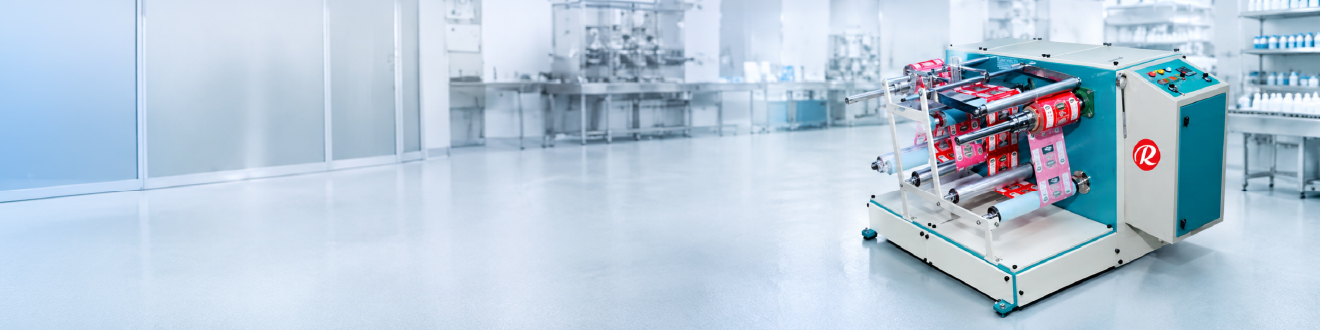
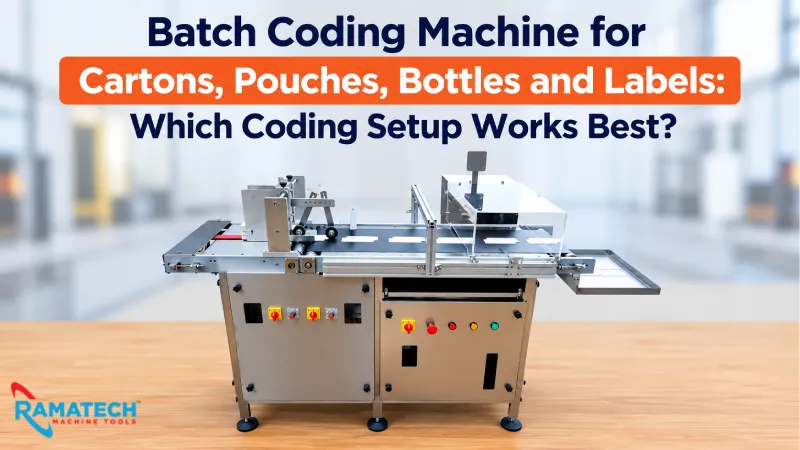
RAMATECH Machine Tools is a leading manufacturer of Batch Coding Machines for cartons, pouches, bottles, labels and other packaging applications.
The right coding result does not depend only on the printer. How the product is separated, positioned and carried through the printing zone can make just as much difference. As a Batch Coding Machine Manufacturer in Ahmedabad, we help B2B buyers select a setup according to the packaging format, coding technology and way the product moves through the production line.
Why the Same Coding Setup Does Not Work for Every Pack
A folding carton behaves very differently from a flexible pouch. A bottle needs stable movement through the coding area, while a loose label or leaflet may need controlled feeding before it reaches the print head.
That is why selecting a batch coding machine should start with the physical behaviour of the product, not simply the type of code you want to print.
Manufacturing date, expiry date, batch number and other variable information may be printed using different coding technologies. The handling system around that coder has to present every pack consistently for a practical production setup. RAMATECH Machine Tools offers machinery covering feeding, conveying, coding-related handling, verification and stacking applications.
Which Coding Setup Fits Cartons, Pouches, Bottles and Labels?
The packaging format gives buyers a useful starting point when comparing coding arrangements.
| Packaging format | Suitable handling approach | What matters most |
|---|---|---|
| Cartons | Carton feeder with inkjet or TTO arrangement | Separation, spacing and repeatable positioning |
| Flexible pouches | Controlled conveyor with TTO or suitable inkjet arrangement | Flat print area and controlled movement |
| Bottles or containers | Variable-speed conveyor coding setup | Stability, speed matching and print-head positioning |
| Labels or leaflets | Friction/vacuum feeding or rewinding-based arrangement | Accurate feeding and prevention of double pickup |
| Serialized packs | Conveyor with verification and rejection | Code checking and removal of unreadable packs |
The final machine configuration should still be selected around the actual pack dimensions, line conditions and coding technology.
Cartons Need Controlled Separation Before Coding
Cartons are often handled as a stack before coding. If two cartons feed together or the gap varies continuously, the print position can become inconsistent.
Our carton-feeding range includes friction-based equipment designed to separate cartons and pass them beneath a coding head at a controlled pitch. Stainless-steel configurations with independent feed and conveyor drives are also available where separate adjustment of feeding and conveying is required.
For buyers comparing a Batch Coding Machine Manufacturer in Ahmedabad, carton size alone should not drive the purchase decision. Feed behaviour, required spacing, coder type and production flow all matter.
Pouches Need a Stable Print Window
Flexible pouches can bend, wrinkle or shift more easily than rigid cartons. For TTO applications, the pouch needs to move through the printing area in a controlled manner so the selected print zone remains suitably presented.
A TTO conveyor is built around this requirement. The conveyor carries flexible packs beneath the TTO head at controlled speed and supports the print area during coding.
The key question is not simply “Can this coder print on a pouch?” It is “Can the pouch be presented to the coder consistently?”
This distinction helps buyers avoid choosing a printing system without considering the product-handling arrangement around it.
Bottles Need Conveyor Control More Than Feeding
Bottles and rigid containers generally do not require the same stack separation used for cartons. Instead, their movement through the print station becomes the priority.
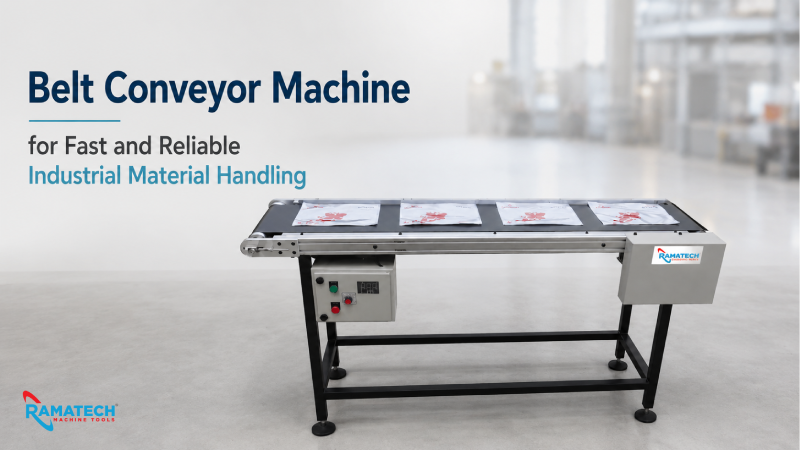
A variable-speed belt conveyor allows the product movement to be adjusted around the coding requirement. Ramatech's range specifically includes a variable-speed belt conveyor designed for inkjet coding, with conveyor speed adjustment used to match the printing operation and line rate.
When working with a Batch Coding Machine Manufacturer in Ahmedabad, buyers should discuss container shape, base stability, coding position and the type of inkjet system already being used or planned.
Labels and Leaflets Can Need More Precise Feeding
Loose labels, leaflets and thin packaging material can create a different feeding challenge. Thin, glossy or curled material may be more difficult to separate reliably using a basic feeding arrangement.
For these applications, vacuum-assisted friction feeding can be useful. Ramatech's range includes a friction feeder with a vacuum system developed for materials where controlled separation is important.
Before selecting the machine, our team typically needs to understand:
- Product material and surface condition
- Minimum and maximum product size
- Required coding position
- Existing coding technology
- Expected line movement
- How products enter and leave the coding station
Different Handling Requirements for TTO, TIJ, and Inkjet
The coding technology and product-handling machine should be considered together.
- Inkjet coding commonly benefits from stable product movement and controlled spacing beneath the print head.
- TTO coding is particularly relevant where flexible packaging or suitable flat products pass through a controlled printing zone.
- TIJ coding may be integrated where a compact, high-resolution coding arrangement suits the packaging and production requirement.
- Track-and-trace applications can add camera verification and automatic rejection where printed codes need to be checked during production.
Our batch coding range supports inkjet, TIJ and TTO-related configurations, along with camera verification and rejection arrangements for suitable applications.
Buyer Checklist Before Selecting a Batch Coding Setup
A machine discussion becomes more productive when the essential application information is provided first.
- What exactly are you coding: carton, pouch, bottle, label or leaflet?
- What are the minimum and maximum pack dimensions?
- Which surface will carry the printed information?
- Are you using inkjet, TIJ, TTO or another coding system?
- Does the product arrive individually or from a stack?
- Does the output need simple collection, stacking or verification?
- What line movement needs to be matched?
Sharing these details helps a Batch Coding Machine Manufacturer in Ahmedabad recommend the handling configuration around the actual production requirement rather than suggesting one machine for every package.
Why Choose Us
At RAMATECH Machine Tools, we focus on the complete product-handling requirement around coding rather than treating every application as identical. Our batch coding range includes carton feeders, TTO feeders and conveyors, variable-speed conveyors, vacuum friction feeders, stacking systems, traversing arrangements and track-and-trace systems. Our machines are built, assembled and trial-run before dispatch, and our team works with buyers to understand pack size, line movement and coding technology before recommending a configuration.
Conclusion
Cartons, pouches, bottles and labels may all require batch information, but they should not automatically use the same mechanical setup. Cartons usually need dependable separation and spacing, pouches need controlled support through the print zone, bottles depend heavily on stable conveyor movement, and labels or leaflets may require more specialised feeding. Working with RAMATECH Machine Tools means selecting the coding-handling arrangement around the product itself. As a Batch Coding Machine Manufacturer in Ahmedabad, we can evaluate your packaging format and help identify the configuration that fits your production line.
Looking for a batch coding setup for cartons, pouches, bottles, labels or leaflets? Speak with RAMATECH Machine Tools about your pack size, coding technology and production requirement. As a Batch Coding Machine Manufacturer in Ahmedabad, we can help you select a practical machine configuration for your application.
Call +91 99799 96006 or email ramatechmachinetools@gmail.com today to discuss your requirement and request a quotation.