Belt conveyor systems deliver smooth, safe, and efficient material handling for manufacturing, packaging, logistics, and heavy industries while reducing labor and downtime.
Material handling plays a crucial role in modern industries. Efficient transport of materials reduces production time, minimizes labor, and enhances operational safety. One of the most reliable solutions for material handling in industrial setups is a Belt Conveyor System. These systems are designed to move heavy and bulky items smoothly across production lines, warehouses, and packaging units.
What is a Belt Conveyor System?
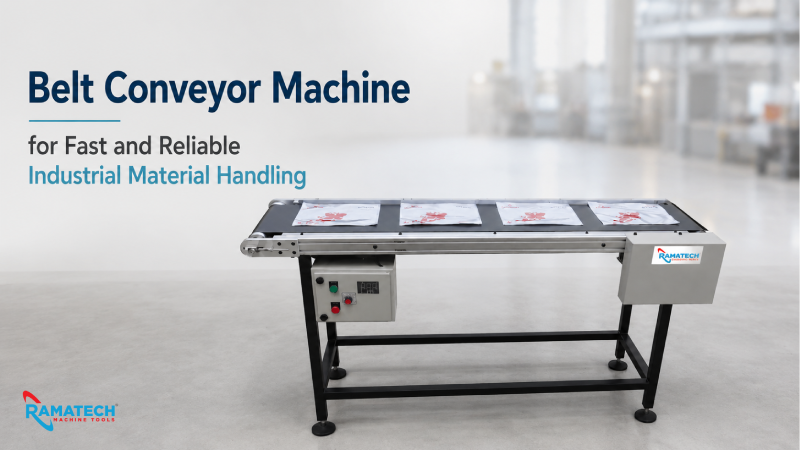
A Belt Conveyor System is a mechanical system that uses a continuous belt loop to transport materials from one point to another. The belt is supported by rollers, pulleys, or a flat surface and is powered by motors, providing seamless and efficient movement of items.
Industries across the globe rely on belt conveyors because they are highly versatile, scalable, and can handle materials of varying sizes, weights, and types. From food processing plants to heavy manufacturing units, belt conveyors serve as the backbone of material handling systems.
Key Parts of a Belt Conveyor
Knowing the main parts helps you choose the right conveyor.
- Conveyors belt: The belt carries the product. It is usually made from PVC, rubber, or polyurethane.
- Rollers: Rollers support the belt and help it move with less friction.
- Pulleys: Drive and tension pulleys move the belt and keep it tight.
- Motor and drive: These powers the belt.
- Frame: The frame holds everything in place and keeps the system stable.
- Idlers: Idlers guide the belt and help keep it aligned.
Types of Belt Conveyor Systems
Different jobs need different conveyors.
- Modular belt conveyors: Made from linked sections. Easy to maintain. Common in packaging and food lines.
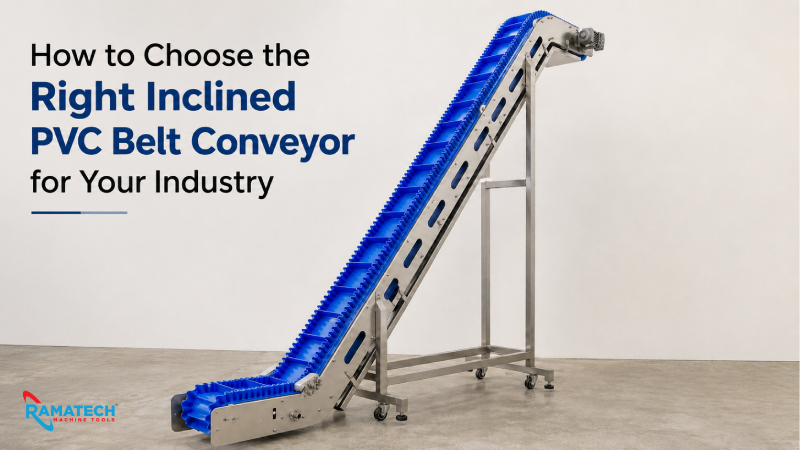
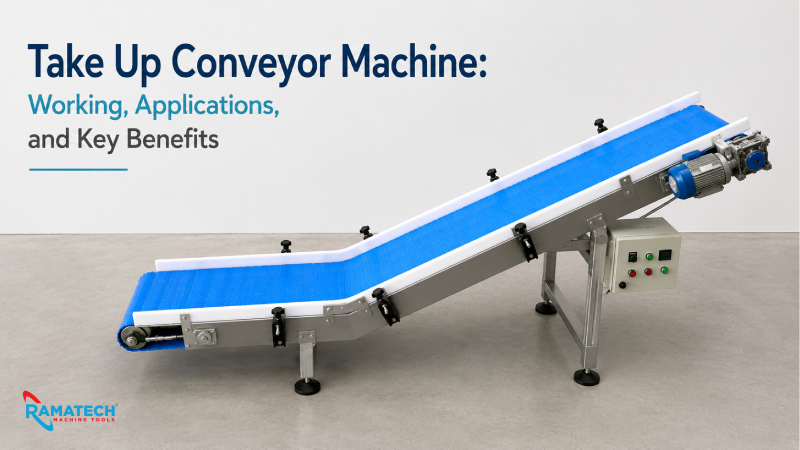
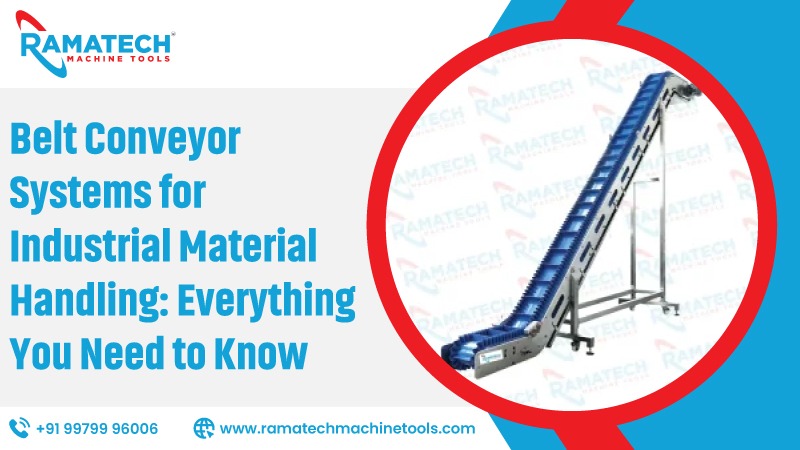
- Inclined belt conveyors: Move products to higher levels without spillage.
- Curved belt conveyors: Used when the line needs to change direction.
- Cleated belt conveyors: Have raised cleats. Used for loose or granular material on inclines.
Benefits of Belt Conveyor Systems
- Efficient material movement: Products move continuously. Downtime stays low.
- Works with many materials: Handles bulk items, packed goods, and fragile products.
- Lower operating cost: Less manual work. Fewer errors. Steady output.
- Safer work environment: Reduces manual lifting and heavy handling.
- Easy to expand: Conveyors can be extended or changed as production grows.
How Belt Conveyor Systems Work
The operation of a conveyor belt is straightforward but requires precise engineering. Here’s how it works:
- Loading: Materials are placed on the belt at the input point.
- Transportation: The motorized system moves the belt, carrying materials along the defined path.
- Guidance: Rollers and idlers ensure the belt remains aligned and moves smoothly.
- Unloading: Products are delivered at the end point, ready for packaging, storage, or further processing.
Applications for Belt Conveyor Systems
Belt conveyors have diverse applications across industries:
- Food Processing: Transporting ingredients, bakery products, and packaged foods.
- Packaging: Smooth movement of packages for labeling, sorting, and dispatch.
- Automobile Manufacturing: Carrying parts along the assembly line efficiently.
- Warehousing and Logistics: Quick movement of goods for storage and shipment.
- Pharmaceuticals: Safe transport of bottles, tablets, and medical products.
- Heavy Industries: Transporting bulk materials like cement, coal, or metal sheets.
Maintenance Tips for Belt Conveyor Systems
Maintaining a conveyor belt increases its lifespan and reduces downtime. Key maintenance practices include:
- Regular Inspection: Check belts, rollers, and pulleys for wear and tears.
- Lubrication: Proper lubrication of moving parts ensures smooth operation.
- Belt Alignment: Ensure belts are correctly aligned to prevent damage.
- Cleaning: Remove debris and material residues to prevent blockages.
- Motor Check: Monitor motor performance to avoid unexpected failures.
Why Choose Us
RAMATECH Machine Tools is a trusted Belt Conveyor Machine Manufacturer in Ahmedabad known for delivering innovative, reliable, and durable material handling solutions. With decades of industry experience, we focus on designing conveyors that meet precise industrial requirements.
Conclusion
Belt conveyor systems are indispensable tools for modern industries that aim for efficiency, safety, and scalability in material handling. By automating the transport of materials, businesses can enhance productivity, reduce errors, and lower operational costs. RAMATECH Machine Tools, a reputed Belt Conveyor Machine Manufacturer in Ahmedabad, offers a wide range of conveyor solutions designed for diverse industrial applications.
For more information about our belt conveyor systems call us at +91 99799 96006 or email ramatechmachinetools@gmail.com.
FAQs
What types of materials can belt conveyor systems handle?
Belt conveyors handle a wide range of materials, including packaged goods, bulk items, heavy machinery components, and delicate products like pharmaceuticals and food.
How long does a belt conveyor system last?
With proper maintenance, high-quality belt conveyor systems from RAMATECH Machine Tools can last 10–15 years or longer.
Can belt conveyors be customized for different industries?
Yes, RAMATECH Machine Tools provides customized solutions based on material type, weight, size, and industry requirements.
How often should maintenance be performed?
Routine inspections, lubrication, and cleaning should be performed weekly or monthly, depending on usage intensity.
Why should I choose RAMATECH Machine Tools?
RAMATECH Machine Tools is a trusted Belt Conveyor Machine Manufacturer in Ahmedabad, offering durable, efficient, and customizable conveyor systems with excellent customer support.