Industrial belt conveyors improve material flow, reduce labor, enhance safety, and support automation with reliable, high-speed performance for modern manufacturing and packaging operations.
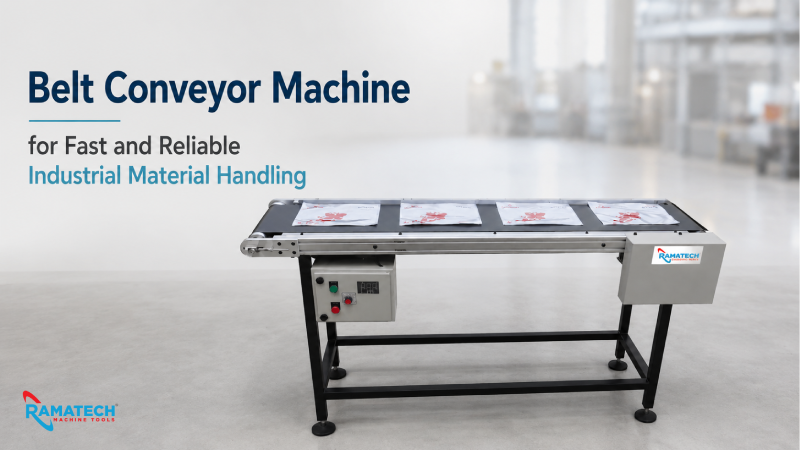
In the rapidly evolving landscape of industrial manufacturing, mastering material flow is no longer an optional enhancement — it’s a strategic imperative. Industrial Belt Conveyors have emerged as a linchpin in facility automation, facilitating seamless transitions between production stages while reducing manual labor and operational complexity. For companies seeking high precision and operational continuity, Belt Conveyor Automation offers a smarter way to handle materials. RAMATECH Machine Tools—a respected Belt Conveyor Machine Manufacturer in Ahmedabad—provides state-of-the-art solutions that power Automated Material Handling Systems and Material Flow Optimization Solutions.
Why Belt Conveyors Are Critical to Modern Automation
Automation and Continuous Material Flow
In automated production lines, consistent flow of materials is the backbone of efficiency. Automated Material Handling Systems built around Industrial Belt Conveyors help remove bottlenecks by mirroring the cadence of downstream machinery. This smooth flow is essential not just for keeping up with high-speed lines, but also for minimizing idle times and enhancing overall productivity.
Labor Reduction and Cost Efficiency
Replacing manual driving of materials with conveyor movement significantly cuts labor costs. These conveyor systems run continuously and reduce repetitive tasks, freeing workers for higher-value roles. Over time, the lowered labor burden pays back the initial investment in automation.
Safety and Risk Mitigation
Manual material handling can lead to musculoskeletal injuries, accidents, or unsafe stacking. A well-designed Industrial Conveyor System dramatically reduces these risks. Conveyor belts come equipped with safety features like emergency stops, guardrails, and integrated sensors, protecting operators while streamlining material flow.
Predictable Throughput and Reliability
Unlike manual handling that can be erratic, belts deliver consistent and predictable material flow, which allows better planning, scheduling, and synchronization with other automated components.
Scalability and Flexibility
One of the hallmarks of modern Material Flow Optimization Solutions is flexibility. Belt conveyors can be customized in length, width, incline, and belt type to suit facility layouts. As production scales or processes evolve, conveyor systems can be reconfigured or extended without full replacement.
Core Benefits of Belt Conveyor Automation
- Enhanced Throughput: By enabling uninterrupted material transport, Belt Conveyor Automation boosts throughput significantly. High-capacity operations can move raw materials, components, or finished goods rapidly, reducing cycle times and increasing output volume.
- Operational Cost Savings: Setting up a conveyor system may require capital upfront, but the long-term savings from reduced labor, fewer product damages, and decreased manual handling can be substantial.
- Energy Efficiency: Modern conveyor systems utilize efficient motors, variable-speed drives, or regenerative drives to minimize energy use. Over long distances, conveyors can outperform other handling methods in energy consumption and environmental impact.
- Durability and Low Maintenance: High-quality Industrial Belt Conveyors are built to endure. Reinforced belts, self-aligning rollers, and heavy-duty components reduce wear and tear. Modular and replaceable parts make maintenance simpler and more cost-effective.
- Safety and Ergonomics: Automated conveyors reduce reliance on manual lifting, lowering the risk of injury. Built-in safety mechanisms further protect operators and streamline compliance.
Key Features to Look for in Advanced Belt Conveyor Systems
When sourcing effective Material Flow Optimization Solutions, certain features distinguish commodity conveyors from truly robust, automation-ready systems.
Modularity and Configurability
- Sectional or modular frames to adapt to changing layouts.
- Ability to scale in length or width.
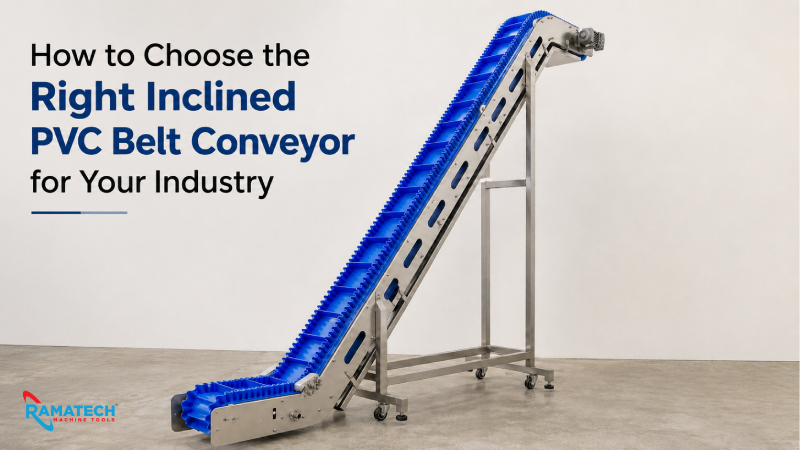
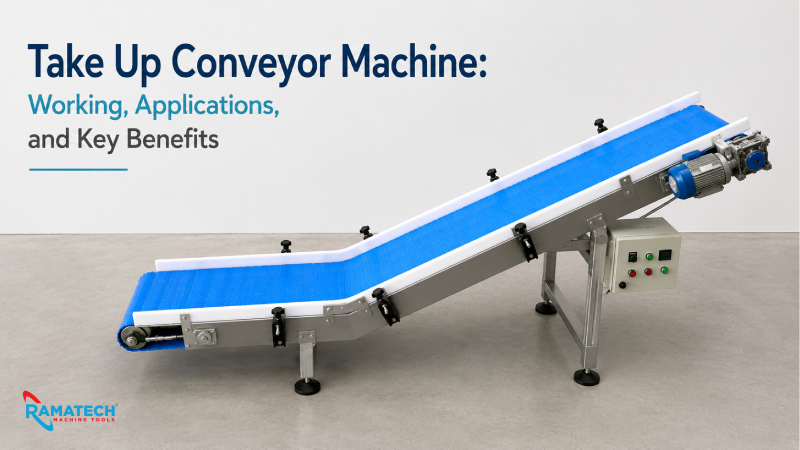
- Options for curves, inclined sections, or vertical lifts to fit facility designs.
Integration with Automation Control
- Compatibility with PLCs (Programmable Logic Controllers), sensors, and other machinery for tight integration.
- Smart controls to adjust belt speed dynamically depending on load or stage.
Safety Mechanisms
- Emergency stop buttons and guards.
- Sensors for belt misalignment, overload detection, and speed monitoring.
Belt Material and Construction
- Durable belt materials (e.g., reinforced rubber, food-grade modules) for longevity.
- Custom options to suit specific materials (abrasive, fragile, or high-temperature).
Energy Efficiency
- Motors with variable-speed drives.
- Low-friction rollers and regenerative drives to reduce energy consumption.
Ease of Maintenance
- Modular sections that allow replacements of small parts rather than the whole conveyor.
- Simple belt tracking and alignment systems to reduce downtime.
Throughput and Load Capacity
- High-speed belt designs matched to production demand.
- Load capacity that aligns with material weight and throughput volume.
Real-World Applications of Belt Conveyor Automation
- Warehousing & Distribution: Industrial Belt Conveyors are extensively used in warehouses for automated cross-docking, sorting, and order fulfillment. These systems help reduce manual labor and accelerate throughput.
- Manufacturing Lines: In manufacturing, conveyors move raw materials, sub-assemblies, and finished goods between stations, coordinating with robotic cells or assembly machines. This tight integration improves productivity and maintains consistent quality.
- Packaging: During packaging, belt conveyors transport items through different stages: filling, labeling, sealing, and boxing. Packaging Line Coding Equipment and vision systems can be seamlessly integrated to mark, inspect, and verify products.
- Food and Beverage: Hygienic belt conveyors, often made from modular plastic belts, are ideal for food-grade environments, allowing fast cleaning and transporting delicate items safely.
- Bulk Materials: Heavy-duty belt conveyors handle raw materials such as minerals, aggregates, and grains. These systems support long-distance transport while minimizing maintenance.
Challenges & Solutions in Belt Conveyor Automation
Challenge: Belt Wear and Tear
Solution: Use high-quality, abrasion-resistant belts, and design for easy modular replacement. Regular maintenance regimes reduce unexpected downtime.
Challenge: Alignment and Tracking Issues
Solution: Self-aligning idlers, crowned pulleys, and sensors detect misalignment early to prevent belt damage.
Challenge: Power Consumption Peaks
Solution: Deploy variable-frequency drives (VFDs) and energy-optimized motors to reduce peaks and improve energy efficiency.
Challenge: Safety Risks
Solution: Integrate safety guards, emergency stops, and real-time sensor monitoring to detect jams or hazardous conditions.
Challenge: Scaling with Production Needs
Solution: Use modular conveyor segments and scalable design to adapt system size and layout without total redesign.
The Role of Belt Conveyor Automation in Material Flow Optimization
- Synchronization with Other Systems: Automated Material Handling Systems built around belt conveyors can link with robotics, sorters, PLCs, and storage systems, creating a synchronized ecosystem. This synchronization helps optimize Material Flow Optimization Solutions, accelerating cycle times and reducing idle operations.
- Predictive Maintenance: Modern conveyor systems can integrate IoT sensors to monitor health (vibration, temperature) in real time. This supports predictive maintenance, avoiding unplanned stoppages.
- Data-Driven Throughput Planning: Control systems generate data on flow rates, throughput, and downtime. Analyzing this data allows operational decision-makers to optimize layout and speed for maximum efficiency.
- Flexible Response to Demand: When demand spikes or changes, modular Industrial Conveyor Systems can be reconfigured quickly. This agility supports seasonal demand, product variation, or scaling.
Why Choose RAMATECH Machine Tools
RAMATECH Machine Tools is a trusted name when it comes to Industrial Belt Conveyors and Material Flow Optimization Solutions. As a premier Belt Conveyor Machine Manufacturer in Ahmedabad, RAMATECH’s systems are engineered for high reliability, long-term performance, and seamless integration into automated production environments. With experience across diverse industries—manufacturing, packaging, warehousing—RAMATECH delivers tailored Automated Material Handling Systems that power continuous flow, minimize downtime, and elevate operational safety. Their commitment to quality, innovation, and customer success makes them an ideal partner for businesses pursuing true automation and efficiency.
Conclusion
In today’s competitive industrial landscape, Industrial Belt Conveyors are indispensable for enabling Belt Conveyor Automation and Material Flow Optimization Solutions. These systems drive efficiency, reduce labor costs, enhance safety, and support high-throughput production. RAMATECH Machine Tools, as a leading Belt Conveyor Machine Manufacturer in Ahmedabad, delivers advanced, customizable Industrial Conveyor Systems that integrate seamlessly into modern automated infrastructures. Investing in such conveyor technology is not just an operational upgrade — it’s a strategic move toward smarter, safer, and more scalable production.
Supercharge your automation strategy with RAMATECH’s cutting-edge belt conveyor systems. Call +919979996006 or email ramatechmachinetools@gmail.com for expert consultation or a custom-designed solution.
FAQs
What industries benefit most from Industrial Belt Conveyors?
Belt conveyors are widely used across manufacturing, warehousing, food & beverage, pharmaceuticals, and bulk material handling, providing reliable and automated transport.
How does belt conveyor automation improve material flow?
By removing manual handling and integrating with control systems, conveyors deliver a smooth, continuous flow that aligns with downstream operations, improving throughput and efficiency.
Can RAMATECH’s belt conveyors be adapted to existing production lines?
Yes, RAMATECH Machine Tools designs modular and configurable conveyor sections that can be customized to fit into existing layouts, regardless of space or process complexity.
How do belt conveyors help in reducing operational costs?
They lower labor costs, minimize product damage, reduce maintenance, and run energy-efficiently through variable-speed drives — contributing to long-term savings.
What safety measures come with modern conveyor systems?
Modern systems from RAMATECH include emergency-stop buttons, alignment sensors, overload detection, guards, and control integration to maintain a safe working environment.